Oh, the tangled web of formal versus casual speech in K-dramas … ever noticed how one moment characters are as polite as a tea party with the Queen, and the next, they’re all casual like old college roommates? Let’s demystify this switcheroo, shall we?
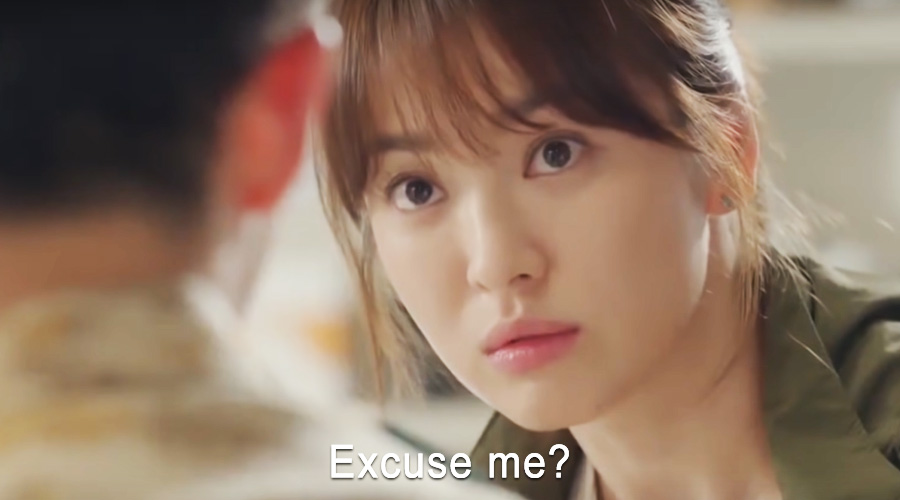
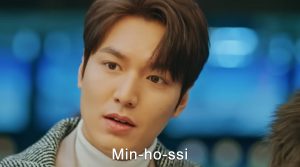
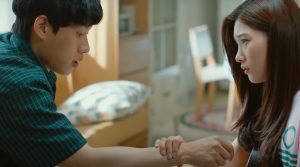
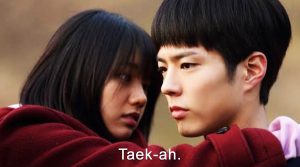
Image courtesy of Descendants Of The Sun, Netflix, and YouTube
Diving into the heart of K-drama dialogue is like opening a Pandora’s box of cultural insights.
In Korean, the level of formality in speech isn’t just about adding a “Mr.” or “Ms.” It’s woven into the fabric of the language itself, from verb endings to whole phrases. But why the constant flip-flop?
Formal vs Casual Korean Speech in K-Dramas: What These Shifts Really Mean
.
.
Picture this. A steely chaebol heir (because there’s always one) addressing his elders or business associates. His speech is as polished and shiny as his shoes. This, my friends, is formal Korean in action.
It’s about showing respect, maintaining social hierarchy, and sometimes, keeping emotional distance. Ever hear endings like “-imnida” or “yo”? That’s formal language putting in the work.
It’s about showing respect, maintaining social hierarchy, and sometimes, keeping emotional distance. Ever hear endings like “-imnida” or “yo”? That’s formal language putting in the work.
Now, flip the scene to our chaebol heir with his childhood friend, bickering over a street food snack. The language here slides into casual mode, shedding the stiffness for a comfy, worn-in tee vibe.
Watch Learn Korean With K-Drama
This casual speech, peppered with plain verb endings and no honorifics, signals closeness, comfort, and a shared history as thick as the plot of a revenge drama.
When Do Koreans Switch from Formal to Casual Speech in K-Dramas?
But when does this switch happen?
It’s all about the relationship dynamics. Family, close friends, and those of the same age might volley casual banter. But introduce a new character, a social superior, or even a love interest (because the path to love is never spoken in casual Korean at first sight), and bam! We’re back to the formal speak.
It’s all about the relationship dynamics. Family, close friends, and those of the same age might volley casual banter. But introduce a new character, a social superior, or even a love interest (because the path to love is never spoken in casual Korean at first sight), and bam! We’re back to the formal speak.
Ever noticed how the switch from formal to casual can be a pivotal drama moment?
It’s like the K-drama way of saying, “We’re officially friends now,” or “I see you as an equal.”
It’s character development in linguistic form, adding layers to relationships without the need for dramatic rain scenes … though we get plenty of those too.
Here’s a thought: Imagine navigating this linguistic dance in your life. Would you formal your way through a first meeting, and at what point does someone earn your casual speech?
It’s a nuanced art, much like knowing exactly when the background music swells to signal a heart-fluttering moment in a K-drama.
So, next time you’re knee-deep in the latest K-drama sensation, pay attention to the formal versus casual cues. They’re not just throwaway lines. They’re windows into the intricate social fabric of Korean culture.
So, next time you’re knee-deep in the latest K-drama sensation, pay attention to the formal versus casual cues. They’re not just throwaway lines. They’re windows into the intricate social fabric of Korean culture.
Why Formality Shifts Hit So Hard in K-Dramas
And here is where things get even spicier.
The deeper you go into Korean formality, the more you start to realize something wild. This is not grammar. This is emotional temperature control. It is mood lighting but with verb endings.
I have watched characters pour out their entire hearts while still clinging to formal speech like it is their last lifeline.
Then the moment they drop into casual tone. Oh my goodness. My soul launches into the sky. My heartbeat? Gone. Flatlined. Call the drama doctor.
Then the moment they drop into casual tone. Oh my goodness. My soul launches into the sky. My heartbeat? Gone. Flatlined. Call the drama doctor.
I still remember the exact sacred moment I understood the true weight of a formality shift. I was deep into a Reply 1988 marathon. Eyes tired. Heart fragile. Snacks low. Then it happened. One character finally dropped the formal speech with someone he loved.
I gasped so loudly my neighbor probably thought I saw a ghost. I literally froze. I felt my spirit ascend. Who knew a tiny verb ending could hit harder than a truck full of tropes.
How Korean Age and Hierarchy Shape Speech Levels in K-Dramas
Koreans grow up swimming in this system. It is their default setting. From childhood you learn that your words are not just words. They are tiny emotional bridges or tiny emotional walls. So when someone crosses that bridge and softens their speech. Oh. You feel it. Deep.
.
.
It is like watching two characters unzip their emotional armor without saying a single dramatic line.
And do not even get me started on age. Age in Korea is a whole saga. A plot twist. A structural pillar of society. One year difference. One. Transforms how you speak to someone.
Imagine meeting a person who is eleven months older than you and suddenly you need a linguistic user guide just to say hello.
Imagine meeting a person who is eleven months older than you and suddenly you need a linguistic user guide just to say hello. My American brain short circuits every time.
But this is what makes K-dramas so insanely rich. Western shows give you snappy dialogue. Cute banter. Fun lines. K-dramas give you emotional earthquakes with grammar.
Writers can crank the tension up or down simply by switching a speech level. A whole relationship can shift with one softened verb. It is addictive. It is outrageous. It is my favorite thing on earth.
I have stared at a single Korean sentence like it holds the secrets of the universe. Because sometimes. It does.
Why These Speech Shifts Matter for K-Drama Fans
So the next time you are watching a drama and the characters suddenly switch tones. Pause. Feel it. Let it hit. That tiny change carries entire galaxies of meaning.
.
.
And please tell me I am not the only one who has tried slipping into formal or casual tone while talking to inanimate objects. Sometimes my plants get casual speech. Sometimes my steering wheel gets full formal. It depends on the day.
Share your stories or questions in the comments. We are all friends here. No formal speech required. Happy K-drama watching chingu ya!
Welcome! I’m Miss Kay, the person behind this site. I call myself a “K-drama scientist.” Silly? Absolutely.😜 Intellectual? Only in my absurdly grandiose K-drama fantasies.🤣 I hope you enjoy your time here and thanks for stopping by.❤️