Let’s say you’ve just settled in for your latest K-drama binge. The leads are gorgeous, the plot is thickening, and then bam! Miscommunication strikes again. Why, oh why, do our beloved K-dramas insist on torturing us (and their characters) with the agony of miscommunication?
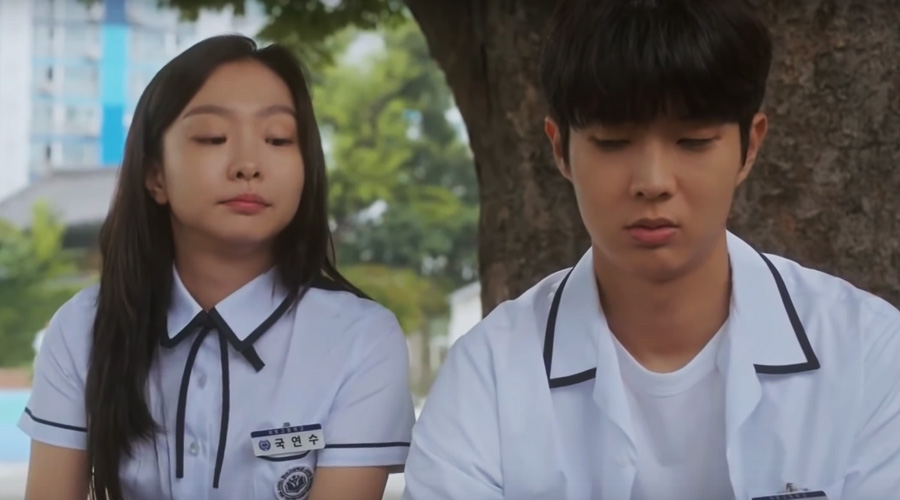
Image courtesy of Our Beloved Summer, Netflix, and YouTube
Let’s dive into the heart of this drama-filled conundrum.
First things first, where would the fun be if our leads just sat down and talked things out like normal people?
Picture it: Episode 3, a simple conversation clears up all misunderstandings, and… that’s it. Show’s over, folks! Roll credits.
.
.
Not quite the emotional rollercoaster we signed up for, right?
Miscommunication is the secret sauce that keeps the plot simmering, turning what could be a three-episode mini-series into a 16-episode saga that we can’t stop watching.
Miscommunication is the secret sauce that keeps the plot simmering, turning what could be a three-episode mini-series into a 16-episode saga that we can’t stop watching.
But there’s more to it than just filling screen time.
Watch “Miscommunication” Between The Leading Characters Plot
Our Beloved Summer
Miscommunication in K-dramas often mirrors the real-life complexities of human relationships.
Why K-Drama Miscommunication Hurts So Good
Ever tried to express your feelings and ended up saying something completely different? Or misunderstood what someone was trying to tell you?
K-dramas amplify these everyday missteps, reminding us that misunderstanding is a part of life and love. It’s comforting, in a way, to see that even perfectly styled characters can mess up their love lives as spectacularly as the rest of us.
Oh, the delicious tension that miscommunication brings! It’s the will-they-won’t-they, the almost-confessions, and the near-misses that keep us on the edge of our seats.
Oh, the delicious tension that miscommunication brings! It’s the will-they-won’t-they, the almost-confessions, and the near-misses that keep us on the edge of our seats.
Without miscommunication, we’d miss out on the joy of shouting at our screens, “Just tell her you love her, you fool!” It’s frustrating, yes, but admit it – it’s part of the charm.
But is there a deeper reason? Could it be that K-dramas are teaching us a lesson in patience and perseverance? That love, real love, is worth waiting for, worth fighting through misunderstandings and mistakes?
The Sweet Reward After The Chaos
Perhaps we’re meant to see that if a relationship can survive the chaos of miscommunication, it can survive anything. A hopeful thought for anyone who’s ever been lost in translation.
And, of course, the resolution of miscommunication often leads to the most heartwarming, satisfying moments in K-dramas. The big reveals, the emotional reunions, the tearful confessions – they hit harder because of the journey it took to get there.
It’s the emotional payoff for enduring episodes of frustration, and boy, is it worth it.
Because without it, we’d miss out on the drama, the tension, the lessons, and the sweet, sweet payoff.
Because without it, we’d miss out on the drama, the tension, the lessons, and the sweet, sweet payoff. It’s a reminder that in love and life, communication is key, but so is understanding, patience, and a little bit of drama.
Got any favorite miscommunication moments from K-dramas? Or maybe you’ve got a theory of your own on why K-dramas love this trope so much.
The Beautiful Madness of Miscommunication
But let’s be honest. Half the time, the miscommunication in K-dramas doesn’t even make sense.
Like, you mean to tell me you two live in the same apartment building, and not once did you think of sending a text to clear things up? Really? You’re out here suffering when a simple “Hey, can we talk?” could’ve saved you ten episodes of emotional turmoil.
Yet, we eat it up like free samples at Costco. Why? Because it taps into something deep inside us, the ache of not being understood.
Every teary K-drama stare-down through the rain-soaked window isn’t just about love. It’s about being seen, heard, and known.
We’ve all had moments when we said the wrong thing or stayed silent when words were needed. Watching our favorite characters fumble through that same pain feels oddly validating.
When Silence Says Everything
Take Our Beloved Summer as an example. Choi Ung and Yeon-su could’ve saved themselves a decade of heartbreak if they’d just communicated like normal adults.
But then again, we wouldn’t have gotten the absolute masterpiece of awkward longing, silent regret, and second chances that made that show unforgettable. Their miscommunication wasn’t laziness, it was emotional realism wrapped in beautiful cinematography.
Because real love, like real life, is messy. It’s not just words. It’s timing, fear, pride, and that desperate hope that the other person will somehow just know.
.
.
Because real love, like real life, is messy. It’s not just words. It’s timing, fear, pride, and that desperate hope that the other person will somehow just know.
Spoiler alert: they never do. Which is why K-dramas make sure we scream at our screens while secretly crying into our snacks.
Lessons Wrapped in Misunderstandings
Here’s the kicker though. Miscommunication doesn’t just frustrate us, it teaches us empathy.
Every time we witness a misunderstanding spiral out of control, we’re reminded how fragile connection really is. K-dramas hold up a mirror to our own clumsy hearts.
They remind us that love isn’t just found in perfect conversations but in the fumbling attempts to understand one another.
So, the next time your favorite K-drama couple is caught in another “you heard what I didn’t mean” situation, don’t roll your eyes. Instead, grab your tissues and thank the writers for giving you yet another emotional workout.
After all, those tangled words and missed confessions are what make the eventual “I love you” hit like a truck full of butterflies.
.
.
And honestly, would we have it any other way?
If you’ve ever screamed “JUST TALK TO EACH OTHER” at your TV while secretly loving every second of it, you’re my people.
Drop a comment below or share this with your fellow emotional K-drama lovers, and let’s celebrate the beautiful chaos of miscommunication together.
Welcome! I’m Miss Kay, the person behind this site. I call myself a “K-drama scientist.” Silly? Absolutely.😜 Intellectual? Only in my absurdly grandiose K-drama fantasies.🤣 I hope you enjoy your time here and thanks for stopping by.❤️